Bridging the gap between Swift and API-first rails

The payments industry often frames modernisation as a choice between established infrastructure and newer API-first models. But global payments aren’t evolving in one direction. They’re expanding in many directions at once.
While Swift remains the backbone of payments, innovation is happening around it through APIs, domestic real-time payment systems, digital wallets, stablecoins and other local payment networks. Supporting this growing mix of payment ecosystems means connecting technologies that were never originally designed to work together.
This article explores why Swift and APIs solve different problems, why modernisation is increasingly about connecting rather than replacing infrastructure, and how financial institutions can bridge both worlds through a single global network like Thunes.
Table of contents
Modernising payments doesn’t mean replacing Swift
Swift continues to underpin global banking. It enables secure, standardised financial messaging between thousands of financial institutions around the world – an average of 53 million FIN messages are sent every day – and it remains central to cross-border payment infrastructure.
That stability is one of its key strengths. At the same time, Swift continues to evolve through initiatives such as ISO 20022, which introduces richer, more structured payment data to improve interoperability, transparency and straight-through processing across payment ecosystems.
Yet, the environment around it has changed significantly. Financial institutions, treasury teams, payment service providers (PSPs) and money transfer operators (MTOs) increasingly need to reach payment destinations beyond traditional bank accounts, including domestic instant payment systems, mobile wallets, cards and stablecoin-enabled payment flows. Each operates through its own connectivity model, compliance rules and operational processes.
That means we need to rethink modernisation. It’s not about replacing or updating trusted infrastructure but about extending it into those newer payment environments.
Swift and APIs solve different problems
Swift and APIs are discussed as though they perform the same role. They don’t. They operate at different layers of the payment journey, which is why modern payment infrastructure now relies on both.
Swift provides trusted global financial messaging
Swift was designed to enable secure, standardised communication between financial institutions. Rather than moving funds itself, it carries the financial messages that allow banks to exchange payment instructions, confirmations and related information across international payment flows.
Its global reach, established standards and regulatory acceptance have made it the foundation of correspondent banking for decades. That consistency allows thousands of financial institutions – 11,500+ connected members at present – to communicate using common message formats, supporting reliable cross-border payments at global scale.
APIs make payment services more accessible and programmable
APIs solve a different challenge. They allow systems to exchange data directly, automate workflows and integrate with external payment services.
That flexibility makes APIs well suited to connecting financial institutions with domestic payment schemes, digital wallets, card networks and other modern payment ecosystems. They also support real-time payment status updates, automated processing and faster integration with new services as payment infrastructure continues to evolve. Put another way, APIs extend what financial institutions can do with Swift, making it easier to connect trusted banking infrastructure with an increasingly diverse range of payment networks.
Understanding these complementary roles is only part of the picture.
The real challenge is extending trusted Swift payment flows beyond traditional correspondent banking into the local payment ecosystems where recipients increasingly expect to receive funds – without fundamentally changing how payments are initiated.
A universal translator between Swift and modern payment ecosystems
You can think of modern payment infrastructure as multiple systems speaking different languages. Swift, APIs, domestic payment schemes, wallet ecosystems and digital asset networks each operate using their own technical standards, message formats and operational rules.
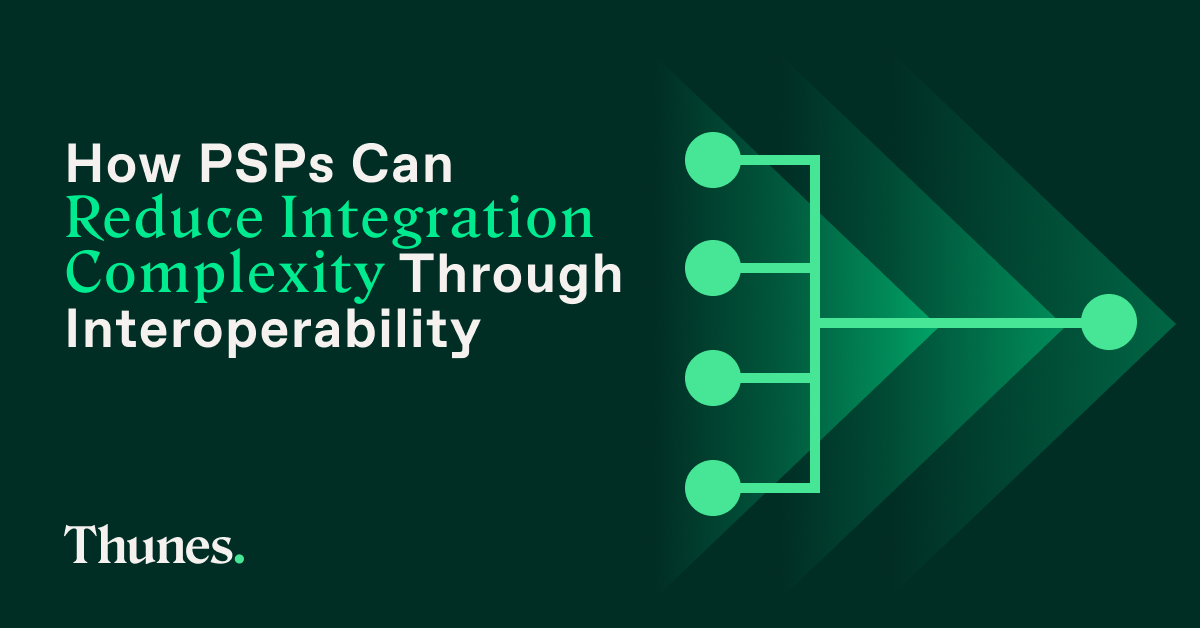
An interoperability layer acts as a universal translator between those ecosystems. It bridges Swift’s trusted messaging infrastructure to work seamlessly with API-connected payment networks, enabling payments to move across different payment systems without requiring financial institutions to build and maintain direct integrations with every payment ecosystem they want to access.
This interoperability creates several operational and commercial advantages for financial institutions:
- Expand reach into new payment ecosystems, including local bank accounts, mobile wallets and stablecoin wallets in hard-to-reach and emerging markets
- Accelerate market expansion by extending existing Swift connectivity instead of building separate integrations for every local payment system
- Improve transparency across the payment journey with better payment visibility as funds move between Swift and local payment ecosystems
- Support new cross-border payment use cases, from traditional bank-to-bank transfers to wallet-based payouts for consumers, digital platforms, gig workers and SMEs
The result is a more flexible foundation for cross-border payments, allowing trusted banking infrastructure and modern payment ecosystems to operate as part of a single interoperable payment journey.
How Thunes extends Swift into modern payment ecosystems
Interoperability becomes valuable when financial institutions can apply it at global scale. Thunes extends trusted banking infrastructure beyond traditional correspondent banking, enabling institutions to reach modern payment ecosystems through a single global network.
Through its Direct Global Network, financial institutions can reach payment endpoints across 140 countries and territories, supporting 90 currencies, 8 billion bank accounts, 4 billion mobile wallets and 15 billion cards, all through a single connection rather than separate integrations into individual payment systems.

Extending Swift into new payment ecosystems
For institutions already connected to Swift, this means extending payment reach without replacing existing messaging infrastructure or building separate integrations for every payment ecosystem.
Thunes extends its reach into the payment ecosystems recipients increasingly use, including;
- Pay-to-Mobile-Wallets capabilities across mobile wallet ecosystems
- Pay-to-Banks delivery through local and international banking networks
- Pay-to-Stablecoin-Wallets supports new forms of digital value transfer
This allows financial institutions, PSPs and MTos to modernise incrementally, while continuing to rely on the trusted messaging infrastructure that already underpins international banking.
One network, multiple ways to connect
Thunes supports connectivity through both existing Swift infrastructure and direct APIs, allowing institutions to choose the approach that best fits their technology.
This flexibility allows banks, PSPs and other financial institutions to modernise at their own pace, extending existing infrastructure with new payment capabilities as business requirements evolve.
Beyond connectivity, Thunes also simplifies the operational complexity of cross-border payments. Fortress Compliance provides built-in compliance controls across payment flows, while SmartX Treasury simplifies liquidity management and supports stablecoin-enabled settlement alongside traditional payment infrastructure.
Interoperability will define the future of cross-border payments
Swift isn’t disappearing, nor are APIs replacing it. The future of cross-border payments will be shaped by infrastructure that allows both to work together alongside domestic payment schemes, digital wallets, cards and emerging settlement models.
For financial institutions, PSPs and MTOs, the priority is no longer deciding which technology will define the future. It is building the connectivity needed to operate across an increasingly diverse global payments ecosystem.
Through its Direct Global Network, Thunes helps make that interoperability possible, allowing financial institutions to connect Swift, APIs and modern payment ecosystems through a single global network.
Get in touch to learn how Thunes helps financial institutions build interoperable cross-border payment infrastructure