How Payments Scale with Global Reach on Local Rails

The primary friction in cross-border payments has shifted from the transit layer to the domestic endpoint.
The cross-border layer, covering routing, FX and settlement messaging, is increasingly scrutinised as organisations seek faster, simpler payment processes. What remains equally important though, and deserving of attention, is the last mile.
And what remains a pain point for many organisations is connecting to the right local infrastructure, meeting the right regulatory requirements and reaching users through the payment methods they actually use.
Get that right, and global payment operations work. Get it wrong, and transaction failure rates climb, compliance costs escalate and market entry stalls before it begins.
The providers that scale globally are not those who impose a single payment experience on every market. They are those who understand each market on its own terms and build connections that allow global flows to move through local rails without friction.
Table of Contents
- Local execution determines global payment performance
- Domestic infrastructure shapes what is operationally possible
- Trust is built from the ground up
- Interoperability means connecting local to global
- Global scale demands local relevance
Local execution determines global payment performance
There is an ideal picture of global payments that looks impressive on paper: broad geographic coverage, support for multiple currencies and a single API integration.
Yet payment deserts persist. The World Bank’s Remittance Prices Worldwide data reinforces this: in Q1 2025, 22 of the 349 corridors tracked had no qualifying payment services at all, a gap driven not by lack of demand, but by insufficient local infrastructure and reach.
This is where local knowledge translates directly into operational reliability, or the absence of it.
The thing is, coverage is not the same as performance. A payment that reaches a market but fails to settle, fails compliance checks or is declined because it arrived via an unfamiliar rail is not a successful payment; it is a cost.
For banks, MTOs and PSPs, too many of these failures carry direct and very real commercial consequences. Repeated failures in a corridor mean that customers will turn to providers that have done the local work properly.
Domestic infrastructure shapes what is operationally possible
Every market a payment provider enters comes with a pre-existing payment environment that defines what is operationally possible from day one.
Domestic real-time payment systems vary significantly in their technical standards, data formats and settlement models. India’s UPI, Brazil’s Pix, the UK’s Faster Payments, and the Eurozone’s SEPA Instant Credit Transfer are not interchangeable.
A payment routed incorrectly through any of these systems – or without the correct supporting information – may trigger compliance flags or require manual intervention to resolve.
Mobile wallet ecosystems add further complexity.
In much of sub-Saharan Africa and Southeast Asia, wallet penetration exceeds traditional banking access. These endpoints are not secondary payment options; they are primary financial infrastructure.
According to the World Bank’s Global Findex 2025 report, account ownership in Sub-Saharan Africa has grown to 58% of adults, with mobile money use at its highest levels ever recorded.
In many markets the primary formal financial account, and sometimes the only one available, is a mobile wallet. That makes local connectivity a commercial prerequisite rather than a nice-to-have.
It’s why the Bank for International Settlements’ 2024 cross-border payments monitoring survey found that enhancing cross-border payments critically depends on improvements in domestic payment infrastructure; the first and last miles of a cross-border payment typically rely on domestic payment rails.
Trust is built from the ground up
Payment adoption in any market is driven by trust, and trust in payments is inherently local.
Users who rely on local players, such as M-Pesa, GCash or bKash, have often trusted that platform with their money for many years.
When it comes to overseas payments providers, there is obvious value in that trusted platform rather than introducing a new and unfamiliar endpoint or payment process to users.
And just as the user trusts the incumbent, payment providers know that accessing a robust, respected local solution means less chance of something going wrong with a payment.
The same logic applies institutionally. Compliance credibility is a direct commercial prerequisite for market access. Financial institutions operating under tight risk controls will not route payments through providers who cannot demonstrate local regulatory standing.
Interoperability means connecting local to global
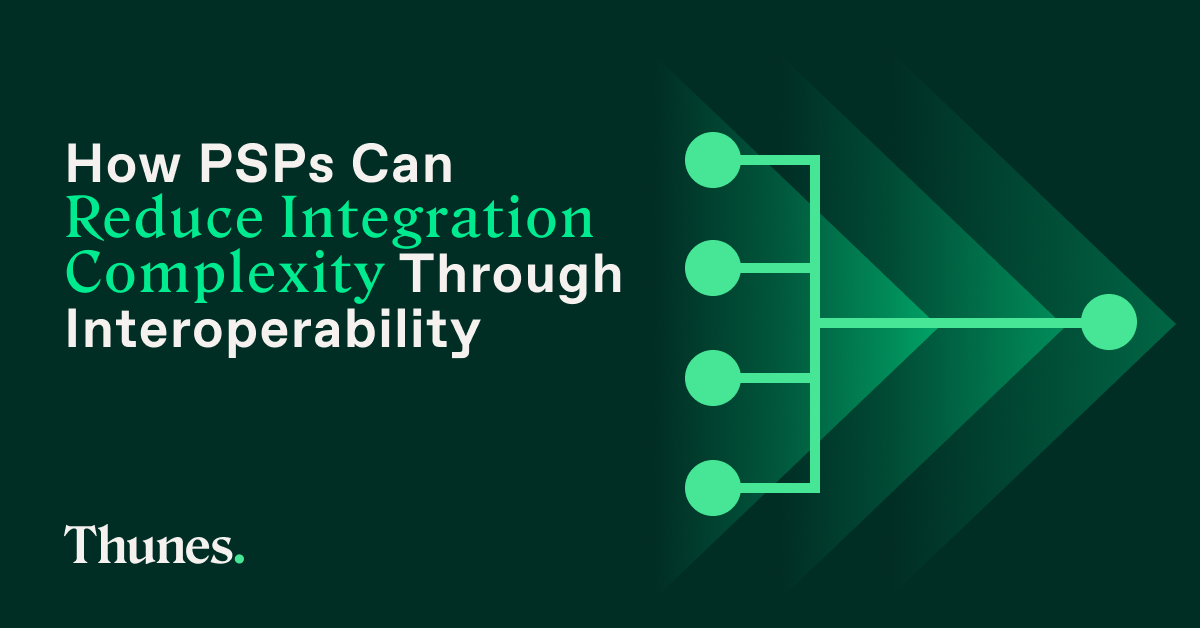
Building and maintaining compliant connections to every local system in every market is beyond the reach of most payment providers acting alone.
This is where interoperability becomes the strategic lever: not making every market look the same, but enabling diverse local systems to communicate, exchange value and settle reliably within a single global network.
Thunes’ Direct Global Network is built on this principle. By connecting directly to over 12 billion mobile wallets and bank accounts, 15 billion cards and more than 220 payment methods across 140 countries, the network gives banks, MTOs and PSPs access to local payment infrastructure without requiring them to build and maintain those connections themselves.
Local complexity is absorbed by our Direct Global Network. This structure eliminates the need for providers to manage fragmented liquidity pools or individual bilateral agreements.
The Thunes SmartX Treasury System provides real-time liquidity across corridors, adapting to local FX conditions. Meanwhile, Thunes’ Fortress Compliance Platform incorporates more than 50 payment licences worldwide, ensuring every transaction meets local regulatory requirements without slowing payments.
Global scale demands local relevance
Global payment strategy must be built from the local level up, not imposed from the global level down.
That means prioritising local method acceptance as a core requirement, investing in corridor-level insight and measuring performance by settlement consistency and compliance stability across individual markets, not just transaction volumes.
The goal is not to choose between global scale and local relevance. It is to recognise that one depends entirely on the other.
Global payment networks thrive when they are built on a foundation of local knowledge, local connectivity and local trust. Without that foundation, global reach is a claim, not a capability.
Ready to connect your business to the global payments ecosystem? Contact Thunes to learn how our Direct Global Network can help you reach more markets, more reliably.