How PSPs Empower Embedded Finance in Client Apps

The services a user encounters inside a ride-hailing app, a freelance marketplace or an e-commerce platform rarely feel like payments in the traditional sense. They feel seamless; like part of the product. But that seamlessness depends entirely on the infrastructure underpinning that service.
Embedded finance is moving deeper into the mainstream of digital commerce, and that is increasing the pressure on payment service providers (PSPs) to make it work reliably, every time, in ever-increasing use cases.
As more platforms look to embed payments and financial capabilities directly into their products, the PSP layer is becoming more important to the user experience, operational resilience and commercial performance of those platforms.
Moreover, for the businesses relying on PSPs to facilitate their payments, the successful integration of embedded payments and financial capabilities directly into their platforms can have a profound effect on their own revenue growth and customer experience.
An outcome of this importance is the evolution of embedded finance as a full-service operating system for PSPs’ clients. It’s an arrangement where high stakes mean potentially high rewards, but only for those who can get integrations, strategies and payments aligned.
- Who is who in embedded finance?
- The fundamental expectations for excellence
- The era of payfac-as-a-service?
- How PSPs have broadened their skillset
- Local market coverage as the limiting factor
- Compliance determines who can compete
- Global connectivity as a competitive foundation
Who is who in embedded finance?
Before we navigate this landscape effectively, it is vital to distinguish between the three frequently conflated terms within it.
Fundamentally, a PSP serves as the essential infrastructure layer in embedded finance, providing the payment processing and operational enablement that allow money to move.
A Payment Facilitator (PayFac) represents a specific commercial and regulatory model where a payment platform acts as the merchant of record for its sub-merchants or clients.
Embedded finance is the broader product context, describing the integration of these financial services directly into a non-financial application.
Understanding these boundaries is critical for any platform aiming for operational resilience, as some PSPs are broadening their capabilities, and that’s shaking up the system.
So why is it so important that PSPs get their offering right?
If a payout fails or a preferred local payment method is unavailable, the result is usually a poorer user experience, lower conversion and weaker loyalty.
For platforms building embedded finance experiences, the case for working with a PSP is not just about speed or convenience; it is about avoiding the cost, complexity and compliance burden of building and maintaining payment infrastructure in-house.
Where things start to get complex is the fact that these PSP users now simply expect more than that.
The fundamental expectations for excellence
Traditional PSP services focused on getting payment acceptance and checkout optimisation working smoothly. Should a payment be expensive, slow, or non-compliant, it reflects poorly on a PSP promising to take the administrative, logistical and compliance heavy lifting away from that client and their app or platform.
The expectations placed on PSPs have widened considerably. Today, platforms expect their PSPs to support embedded finance use cases in a plug-and-play way, typically through robust APIs and reliable, expansive local connectivity.
Ultimately, a platform can design a compelling embedded finance experience, but the end user can only interact with what the underlying payment infrastructure can actually support.
What’s more, when platforms launch internationally from day one, the payments that power those experiences need to work across different local rails, payment methods and settlement models.
A gig-economy platform paying workers across Southeast Asia, Latin America and sub-Saharan Africa cannot treat each market as a separate build; it needs a PSP with local connections already in place.
The era of payfac-as-a-service?
PSPs are no longer limited to facilitating checkout alone; for many platforms, they now act as the infrastructure layer that supports in-app financial products, cross-border pay-ins and payouts, and access to local preferred payment methods.
Some providers are packaging this capability as payfac-as-a-service, which can be an attractive way for platforms to gain more control over the payment experience without building the full operational stack themselves.
Building a traditional payfac model requires significant upfront investment, ongoing operational effort and substantial compliance responsibility.
A payfac-as-a-service model can reduce that burden for platforms by helping them capture more of the value in their payment experience, while still avoiding the cost and complexity of building the infrastructure entirely in-house.
The rise of payfac-as-a-service offers an attractive middle ground for platforms. However, this should be viewed strictly as a commercial and regulatory model rather than a generic label for PSP services. It allows a platform to gain greater control over the user experience and capture more value without building the full operational stack itself.
In this arrangement, the platform takes on specific merchant of record responsibilities, while the underlying PSP continues to manage the heavy lifting of infrastructure and global connectivity.
How PSPs have broadened their skillset
It is no surprise that the scope of what PSPs now need to support has broadened considerably. PSPs that rely only on basic transaction processing face growing competition and pressure on margins, which makes depth across adjacent capabilities increasingly important.
An increasing number of platform-level products sit above the PSP infrastructure layer. Beyond standard card acceptance and checkout, platforms using embedded finance may need support for:
- multi-party payments
- automated settlement flows
- mass payouts in local currencies
- wallet funding
- stored balance management
- embedded lending
- BNPL
- contextual insurance products
Embedded finance is not just about completing the transaction; it is also about the operational processes that sit around it, including reconciliation, refunds, earnings tracking and tax documentation.
Those are the kinds of services that can help sub-merchants get up and running (and generating revenue) faster and with less friction.
The PSPs gaining ground are those building or partnering for depth across these use cases.
Local market coverage as the limiting factor
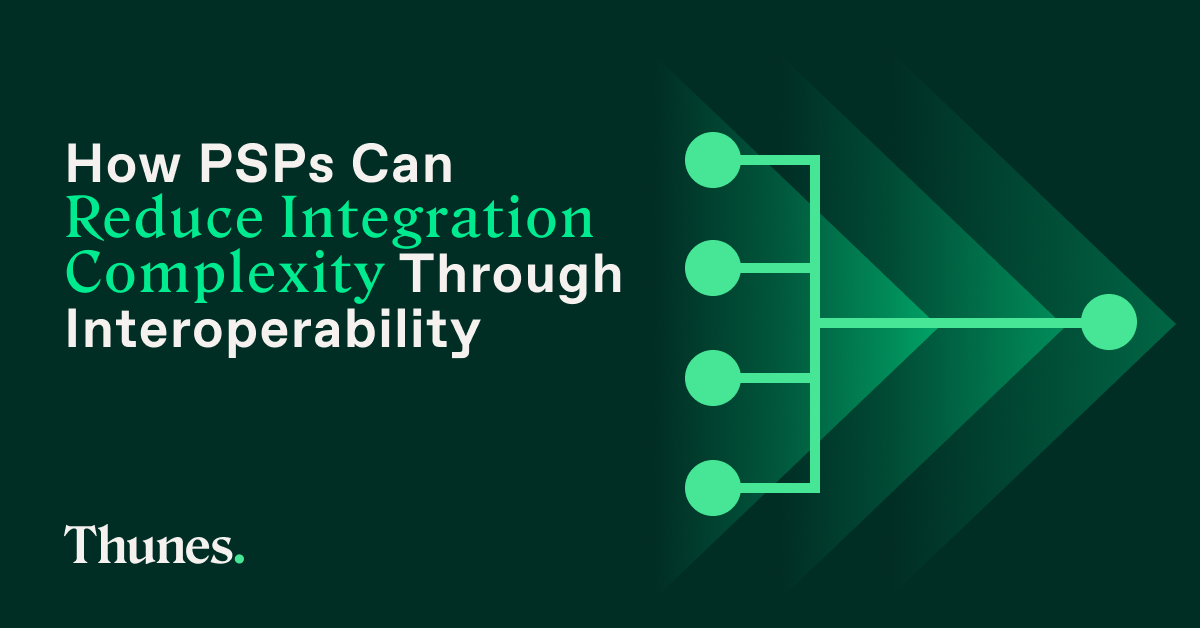
For businesses targeting rapid global growth, choosing a PSP with broad local coverage is the key to worldwide scalability because instead of waiting for that PSP – or multiple engaged PSPs – to build market-by-market integrations for each market, platforms can use a single global integration to immediately unlock access to dozens of countries.
Each market operates on different technical standards, settlement models and local payment preferences. If a payment is routed incorrectly, it can create delays, trigger compliance issues or require manual intervention, all of which add friction to the user experience and operational burden for the platform.
Few use cases illustrate this challenge more clearly than mass payouts.
Gig and platform workers often depend on fast, reliable access to earnings, which makes payout speed and local reach a practical necessity rather than a nice-to-have.
PSPs serving these platforms need to support bank accounts, wallets and cards across multiple markets, with real-time status updates, transparent FX pricing and local-currency settlement.
Getting this capability right benefits both the PSP and the platform. Deep local coverage can improve visibility across payment flows, support better routing decisions and help platforms gain a clearer view of what works in each market, which in turn can improve outcomes for their users.
Access to those local payment methods matters because they are central to how people pay in many markets. Digital wallets now account for a large share of global e-commerce transaction value, and in parts of Asia, Africa and Southeast Asia they are often the default way to move money online.
Digital wallets accounted for 56% of global e-commerce transaction value in 2025, representing over $13.8tn in combined spending. In the Asia-Pacific, that share reached 74% of online payments.
In markets across sub-Saharan Africa and Southeast Asia, mobile wallets are often part of the core payment infrastructure rather than a supplementary option. That means a PSP that cannot connect to services such as GCash in the Philippines, M-Pesa in Kenya or GoPay in Indonesia is limited in how effectively it can serve those markets.
The same logic applies to real-time payment systems. Rails such as Brazil’s Pix and India’s UPI were built for domestic use first and are now increasingly extending across borders, which adds another layer of complexity for PSPs that need to support them.
Compliance determines who can compete
Embedded finance introduces compliance obligations that are more complex than those associated with standard payment processing.
When a PSP supports in-app lending, stored-value wallets or insurance, it may be operating across multiple regulatory frameworks at once, with requirements that vary by country, product type and end-user relationship.
Licensing requirements, AML and KYC obligations, data localisation rules and consumer protection regulations all shape what is operationally possible.
In many cases, particularly around payment acceptance, the PSP carries a significant share of the compliance burden, rather than the app platform itself.
PSPs that streamline compliance can significantly reduce operational overhead for their clients’ platforms.
By handling KYC checks and maintaining processes that keep pace with regulatory requirements across multiple jurisdictions, they can help platforms launch into new markets more quickly, from months to weeks in certain cases.
Rising supervisory scrutiny and higher compliance costs are likely to favour providers with stronger operational and regulatory infrastructure.
That makes compliance not just an operational issue, but a factor that can shape which PSPs and platforms are able to compete effectively at scale, with the most effective partnerships those where the PSP’s infrastructure is robust enough to let the platform focus on its core product without being slowed down by the technicalities of local regulations.
PSPs with compliance infrastructure already in place across multiple jurisdictions can give platforms a meaningful advantage over building that capability market by market.
While a PSP can significantly reduce the operational burden, there is a clear distinction between infrastructure compliance and product-level obligations.
The PSP typically carries the weight of regulatory responsibility for payment acceptance and money movement, including KYC checks and AML monitoring across multiple jurisdictions. Nevertheless, the platform remains responsible for the specific requirements of the financial products it chooses to embed, such as lending or insurance.
How Thunes offers connectivity as a competitive advantage
Many PSPs close the gap between their core processing capabilities and the local connectivity requirements of embedded finance by partnering with global payment networks.
This gives them access to pre-built connections to domestic banking rails, mobile wallet providers and alternative payment methods across multiple markets without having to build each integration independently.
The Thunes Direct Global Network provides this foundation by connecting directly to over 12 billion mobile wallets, stablecoin wallets and bank accounts, 15 billion cards, and more than 220 payment methods across 140 countries, helping banks and PSPs access local payment infrastructure without having to maintain each connection themselves.
That means access to real-time payouts in more than a hundred countries, direct integration through a single API, access to billions of endpoints, and easy scaling across new markets.
For PSPs looking to expand their services and support embedded finance use cases, the capability that matters most is not just checkout optimisation or fraud detection, but the ability to help clients unlock new revenue streams while keeping the operational burdens down.
This shift moves the PSP beyond a simple processor and into the role of a strategic partner for their clients’ long-term growth. It’s a key example of how embedded finance is reshaping the relationship between platforms and their users, and PSPs that understand both the ambitions of the platform, and the realities of local payment infrastructure, are best placed to support that shift.
Ready to extend your payment capabilities across more markets?
Contact us to learn how our Direct Global Network can help PSPs deliver embedded finance experiences that work reliably, wherever their users are.