How Stablecoins and Mobile Wallets Make Challenging Cross-Border Payments More Accessible

Sending payments into wallet-first markets is already a core part of how money moves globally. In many emerging economies, mobile wallets act as the primary financial interface for receiving and using funds in local currency.
Stablecoins are now being explored alongside these systems as an additional layer for moving and storing value digitally. This is particularly relevant in markets where currency volatility or inflation affects how recipients manage funds.
For MTOs and PSPs, this creates new ways to support cross-border use cases while building on existing wallet-based payment infrastructure.
Table of contents
Why mobile wallets and stable value matter in cross-border payments
Thunes accesses more than 4 billion mobile and stablecoin wallets through its Direct Global Network – an enormous body of evidence showing their global popularity. Indeed, in many emerging markets, mobile wallets are the preferred way individuals and businesses access financial services.
Rather than relying on bank accounts or cards, users receive funds, store value, and make everyday payments directly through wallet-based systems.
This has clear implications for how cross-border payments need to be delivered, and payment providers must align with how financial activity takes place locally:
- Wallet-first financial behaviour: Recipients expect to receive funds directly into wallets that are already integrated into daily spending, bill payments, and peer-to-peer transfers.
- Limited reliance on cards and traditional banking: Card ownership and bank account penetration remain uneven across regions, meaning wallet-based payment options expand access to a broader segment of the population.
- Demand for stable value in certain markets: In economies experiencing currency volatility or inflation, recipients may prioritise maintaining the value of funds received from abroad.
- Different recipient use cases: Some recipients require immediate access to local currency for spending, while others may prefer to hold value before converting or using funds.
Existing cross-border infrastructure will continue to support global payment flows, including transfers into mobile wallets, but additional settlement approaches need to be explored to complement these systems and extend how value can be delivered across markets.
Understanding stablecoins and mobile wallets in a payments context
Stablecoins and mobile wallets serve different functions in the payments ecosystem, but when linked, they form a structure that supports the movement and use of digital value across markets.
Stablecoins
Stablecoins are digital assets that are designed to maintain a consistent value (known as a peg), relative to a reference currency, typically the US dollar. The most widely used stablecoins include Tether’s USDT and Circle’s USDC, which have a combined market value of over $250 billion.
In a payments context, stablecoins can serve two roles. They are increasingly used as a settlement mechanism to move value between institutions without relying on traditional correspondent banking chains. Transactions are recorded on blockchain networks and transferred between participating entities, supporting faster movement of funds with greater visibility.
At the same time, stablecoins can also act as a payout method. Payment providers can enable transfers directly to stablecoin wallets, allowing recipients to receive and hold value in a stable digital currency rather than immediately converting into local fiat. This is particularly relevant in markets where access to stable value is a priority.
Mobile wallets
By contrast, mobile wallets act as the consumer-facing payment interface.
In many emerging markets, wallets serve as the primary financial account for individuals and small businesses. Users rely on these systems to store funds in local currency, receive payments, pay merchants, and access embedded financial services through mobile devices.
Together, these two layers address different parts of the payments process. Stablecoins support the movement of value between sending and receiving parties, while mobile wallets provide the local infrastructure through which funds reach end users and circulate within domestic payment ecosystems.
What stands in the way of MTOs and PSPs scaling these models globally?
Despite growing interest and use cases, scaling stablecoin and wallet-based payment structures globally remains complex, for several reasons.
- Fragmented wallet ecosystems: Mobile wallet markets are highly fragmented as a result of the often numerous different providers active in individual countries or regions. For businesses expanding payout coverages, this presents the prospect of building multiple integrations with each wallet platform.
- Regulatory and compliance requirements: Payment providers must navigate licensing, sanctions screening, and transaction monitoring requirements that vary by region and payment type. Abidance by these controls is essential for any business conducting cross-border payment flows.
- Last-mile currency conversion: Even when value moves digitally via stablecoins, funds must still be converted into local fiat before reaching recipients through domestic wallet systems.
Addressing these challenges requires infrastructure capable of connecting digital settlement models with regulated local payout rails.
How Thunes enables stablecoin and wallet-based cross-border payments
Connecting stablecoin settlement models to widely used mobile wallet systems depends on infrastructure that links global payment flows with local payout networks. For MTOs and PSPs, this involves accessing multiple wallet ecosystems, supporting regulated payment flows, and managing operational complexity across corridors.
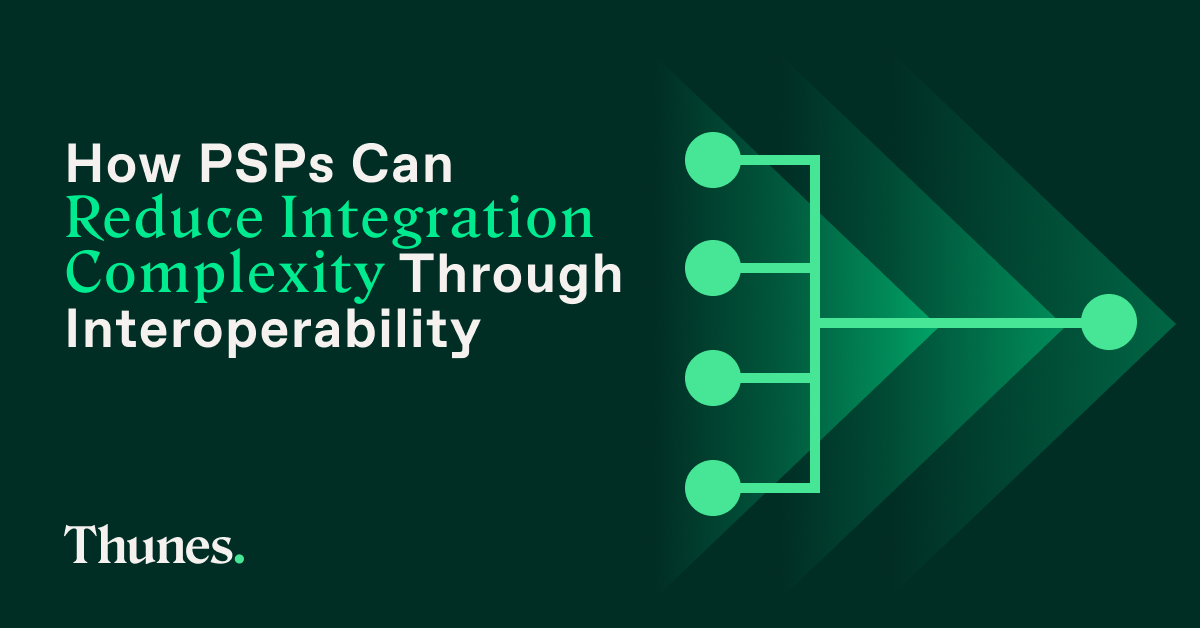
Through a single integration to Thunes’ Direct Global Network, payment providers gain access to both fiat mobile wallet payouts and stablecoin wallet payouts. Thunes acts as a one-stop shop for these payout types, allowing providers to support different recipient needs without building separate integrations.
This is supported by a single pool of liquidity, which can be used to fund both mobile wallet and stablecoin payouts. As a result, payment providers do not need to manage separate balances or prefunding structures across different payout models.
By combining access to multiple payout endpoints with a unified funding approach, Thunes enables providers to expand cross-border payment services while maintaining operational simplicity.
Connecting global send markets to local wallet ecosystems
Thunes provides access to mobile wallet ecosystems across emerging markets through a single API integration. This allows MTOs and PSPs to reach wallet users in markets where mobile wallets serve as the primary financial account.
- Southeast Asia: Access to multiple wallet providers across markets such as the Philippines, Indonesia, and Vietnam.
- South Africa: Wallet payout capabilities across markets, including Kenya, Ghana, and Nigeria, without requiring local entity setup.
- Latin America: Access to digital wallets and instant payment ecosystems in markets such as Brazil, where systems like Pix have rapidly expanded the use of mobile-based payments.
This connectivity allows providers to extend cross-border payment services into wallet-first economies without managing separate integrations with individual wallet providers.
Bridging stablecoin settlement to real-world payouts
Stablecoins can support the digital movement of value between sending and receiving parties, but recipients still require funds in local currency that can be used within domestic payment systems.
Thunes supports this transition in two ways:
- Stablecoin settlement → local fiat wallets: Enables the conversion of stablecoin-based settlement into local fiat payouts via regulated wallet rails
- Multi-corridor scalability: Launching new wallet corridors without rebuilding infrastructure
As new wallet corridors become available, payment providers can expand payout coverage without rebuilding payment infrastructure for each market.
Built-in compliance at the payment layer
Thunes integrates compliance controls directly into every stage of the payment flow through its Fortress Compliance Platform, supporting transaction monitoring, sanctions screening, and regulatory data requirements across the network.
Local clearing and settlement processes are aligned with market-specific requirements, allowing payment providers to support regulated payment flows while expanding into new corridors.
Together, Thunes’ Direct Global Network and Fortress Compliance Platform provide the infrastructure that connects stablecoin settlement mechanisms with mobile wallet ecosystems and domestic payment systems worldwide.
From alternative rails to mainstream infrastructure
Stablecoins and mobile wallets are not niche payment methods. They are becoming part of how cross-border finance is accessed in emerging and wallet-first markets.
Expanding these capabilities across markets requires connecting digital settlement mechanisms with trusted local payout systems without increasing operational complexity.
Through Thunes’ Direct Global Network, MTOs and PSPs can connect these emerging settlement models with established wallet ecosystems and domestic payment systems while maintaining the speed, reliability, visibility and compliance required for global payment flows.
For those already working with stablecoins, these developments are influencing how international payments are delivered, introducing faster settlement approaches, broader reach into underbanked populations, and new ways to provide access to stable value.
Explore how Thunes’ Direct Global Network supports wallet-based payouts and next-generation cross-border payment models.