Wallets and the Changing Shape of Money Movement

Where once the bank account was king, across consumer payments, platform payouts and remittances, value now regularly sits in digital wallets, mobile wallets, super apps, and platform balances.
That changes the starting point for cross-border payments.
Users expect wallet-held funds to move with the same speed and control they experience inside apps, even when the payment crosses currencies, countries, and local payout systems.
For Payment Service Providers (PSPs), Money Transfer Operators (MTOs), and embedded finance platforms, the challenge is in reflecting that reality and the change in consumer preferences. That means making sure wallet-held value can be supported, converted, checked, routed, and delivered into local financial systems safely and reliably, across fiat and digital rails.
This article looks at how that shift is changing payment flows in practice and why network infrastructure and liquidity management have become central to making wallet-based payments work across borders.
Table of contents
The shift from accounts to wallets
The bank account has long been the default starting point for money movement, but that model is changing.
Digital wallets are becoming a primary store of value across consumer, platform, and enterprise use cases, and research indicates this trend will continue in the near future:
- Two-thirds of the world’s population is expected to own a digital wallet by 2029.
- The number of mobile wallets globally is projected to grow from 4.3 billion in 2024 to 5.8 billion by 2029.
- The global digital wallet transaction value is expected to grow 73% between 2024 ($10 trillion) and 2029 ($17 trillion).
Wallets are not replacing bank accounts, but they are changing where money sits before a payment begins. Funds are increasingly held within app-based environments and then pushed to other systems as needed.
| Area | Traditional bank account | Digital wallet |
|---|---|---|
| Interest | May pay interest on balances, depending on account type and market | Typically does not pay interest on stored balances |
| Access model | Branch, card, online banking, or mobile banking | App-based access, usually mobile-first |
| Store of value | Deposits held in an account | Stored balance or e-money balance |
| Availability | Linked to banking systems and cut-off times | Designed for continuous app-based access |
| Payment experience | Account transfers, cards, wires, local rails | In-app transfers, wallet payments, wallet withdrawals and local payouts |
| Cross-border challenge | Bank connectivity, FX, correspondent banking | Wallet interoperability, FX, local payout access, compliance across endpoints |
The impact is twofold:
- Value is spread across multiple wallet providers and platforms rather than concentrated in a single account.
- Expectations around access and speed are shaped by in-app experiences, where transfers appear immediate and always available.
For PSPs, MTOs, and platforms, that combination increases the importance of how liquidity is managed and how funds move between wallet ecosystems and local financial systems.
What changes in day-to-day payment flows
As wallets become the starting point for payments, the structure of a transaction changes. Payments that once moved between bank accounts now begin inside wallet ecosystems and need to reach a wider range of endpoints, especially in a world where gig work and cross border payments are increasingly common.
This is partly driven by how people and businesses operate across currencies. Income, spending, and transfers are no longer confined to a single domestic system. Wallets provide a flexible way to hold and use value across different contexts, especially in cross-border use cases.
The front-end experience remains simple, but behind the scenes, payments now involve additional steps such as currency conversion, routing between systems, and validation across different providers.
Payments start inside closed ecosystems
Wallets operate within closed environments, and that’s why transfers between users on the same wallet platform are fast and predictable.
The moment funds need to move outside that ecosystem, complexity increases. A payment from a wallet may need to reach a bank account, a different wallet provider, or a local cash-out method, and each step introduces new requirements for routing, formatting, and validation.
Speed expectations increase
User expectations are shaped by what they experience inside apps. If a wallet-to-wallet transfer happens instantly within the same provider, that becomes the benchmark for all payments.
Cross-border payments are judged against instant domestic bank transfers and in-app wallet transfers. Any delay becomes visible to the end user, even if it stems from FX processing, compliance checks, or local clearing systems.
Liquidity becomes more active
In an account-based model, liquidity is typically held and managed at the account level, often prefunded across key corridors.
In a wallet-based model, liquidity has to move more dynamically because funds are converted between currencies, routed across multiple systems and allocated across different payout types.
This increases the need for coordinated liquidity management across markets, especially when supporting multiple wallet providers and payout methods.
Conversion becomes part of the experience
Wallet balances are frequently held in one currency and used in another. That means foreign exchange is no longer a back-office step, but now directly affects the outcome of the payment.
Poor FX handling can lead to delayed payout and incorrect amounts delivered, or even failed transactions due to mismatches in expected values. For users, this shows up as a broken payment experience. For PSPs and MTOs, it becomes an operational issue that affects trust and cost.
What this looks like in practice
These changes are easier to see through real workflows.
- B2C payout to a mobile wallet. A global platform pays creators across multiple countries. Funds are held centrally, then distributed to local mobile wallets. Each payout requires currency conversion and routing to a specific wallet ecosystem, with different requirements by market.
- C2C remittance to a wallet recipient. A user sends money to a family member’s mobile wallet. The sending experience is simple, but the transaction moves through FX conversion, compliance checks, and local wallet integration before the funds are credited.
- PSP managing multi-wallet corridors. A PSP supports payouts into several wallet providers across regions. Each provider has its own integration standards, compliance requirements, and settlement processes. Managing these differences increases operational overhead and introduces more potential points of failure.
The common factor is execution. The payment only works if funds are converted correctly, routed to the right endpoint, and delivered in line with local requirements.
The hidden complexity of wallet-based payments

These changes in payment flows introduce a second challenge. As more systems are involved in each transaction, execution becomes harder to manage consistently across markets.
What appears as a single payment to the user depends on multiple integrations, regulatory checks, and routing decisions. As coverage expands, so do the points where a transaction can slow down or fail.
Interoperability is limited
The drawback to wallets is that the ecosystems are not universally connected. A payment may need to move between one wallet provider to another, or between a wallet and a bank account, and each of these paths may require separate integrations or specific handling of formats and data.
For PSPs and MTOs, this creates fragmentation. As coverage expands, so does the operational burden.
Interoperability is what determines whether wallet-held value can move beyond its original ecosystem and reach real-world endpoints. Without it, scale is difficult to sustain.
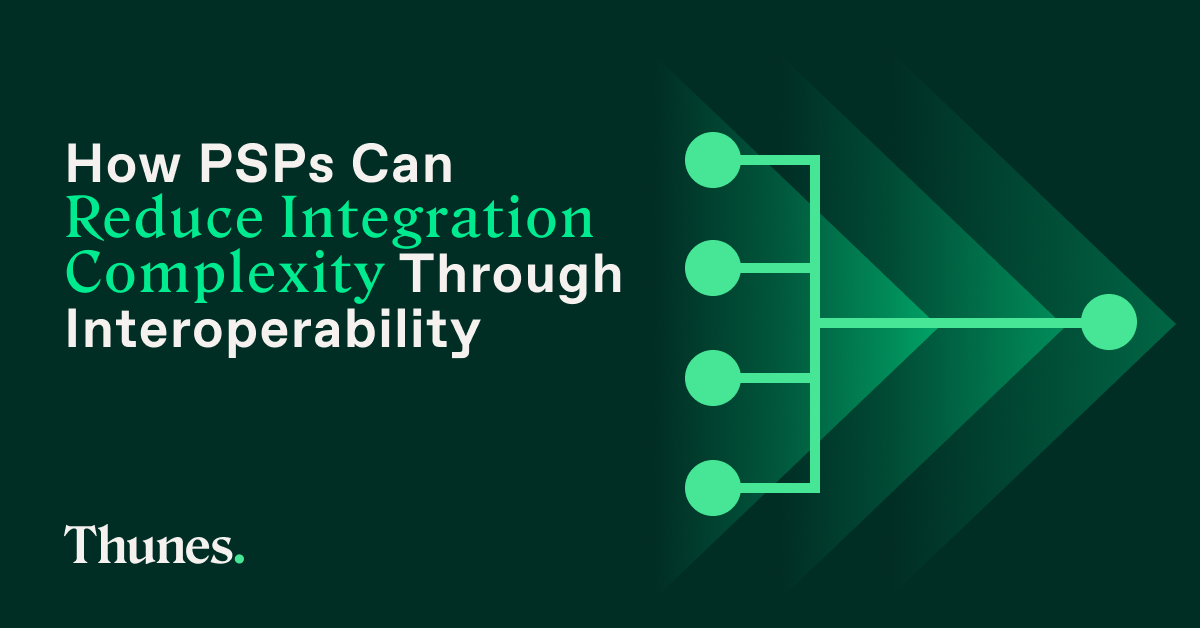
This is where network-based models change the equation. Rather than building separate integrations for each wallet provider and payout type, PSPs and MTOs can connect once and access multiple endpoints through a single network.
Thunes’ Direct Global Network enables interoperability across banks, mobile wallets, and other payout methods so funds can move across systems without requiring corridor-by-corridor integration.
Compliance expands across endpoints
Every cross-border transaction touches multiple regulatory environments. Wallet-based payments add further layers, as each provider may apply its own requirements on top of local regulations.
A single transaction may involve market compliance checks and cross-border transfer controls, and must meet wallet provider-specific KYC and data requirements.
Maintaining consistency across these layers is challenging. Requirements differ by corridor, and gaps in data or validation can lead to delays or rejected transactions.
Reliability becomes harder to maintain
As the number of endpoints increases, so does the number of potential failure points, whether that’s incorrect routing to the wrong endpoint or mismatched currency expectations between systems.
Even when each individual component works as expected, coordinating them in real time introduces risk. From the user’s perspective, these failures appear as delays or missing funds, regardless of where the issue occurred.
Why network infrastructure matters in a wallet-first world
Interoperability provides the foundation that allows funds to move from wallets to other wallets, banks, and payout methods. What matters next is how consistently those movements are executed across currencies, markets, and endpoints.
To complete a single transaction, multiple elements need to work together:
- Routing funds to the correct endpoint
- Converting between currencies
- Validating against local regulatory requirements
- Delivering into the required payout method
That’s why network-based models are critical infrastructure to the wallet-first world.
They coordinate execution at a single layer, so payment providers can standardise routing, conversion, and compliance across markets, improving consistency while reducing operational overhead.
Connecting wallet-based value to global payment systems
As wallets become a primary store of value, the operational challenge is no longer just about access to endpoints but about what happens after.
The focus for PSPs and MTOs is on how wallet-held funds can be moved across borders and delivered into local systems with consistent execution. That requires a network-level structure that makes all the various connections seamless and invisible.
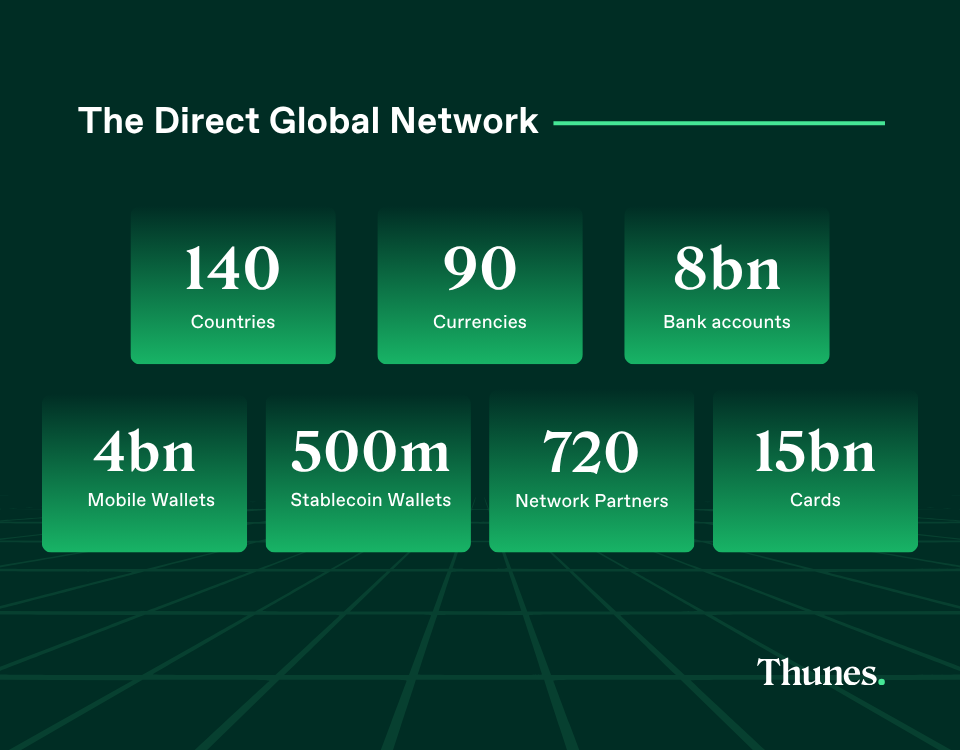
Thunes’ proprietary Direct Global Network allows Members to make payments in real-time in over 140 countries and more than 90 currencies. It spans 4 billion mobile wallets and stablecoin wallets, 8 billion bank accounts and 15 billion cards.
Fiat and stablecoin-based settlement are supported within the same infrastructure, allowing treasury teams to manage liquidity centrally and deploy it across corridors without maintaining separate prefunding positions for each route.
Thunes’ Fortress Compliance platform applies regulatory and risk controls across markets, helping ensure that transactions meet local requirements while maintaining consistent handling of data, validation, and execution.
The result is a payment model where wallet-based value can move reliably into local financial systems at scale, with liquidity, execution, and compliance managed through a single connection rather than a patchwork of corridor-specific infrastructure.
Ready to expand your wallet-based payment capabilities? Speak to an expert today.