What It Takes to Create a Truly Global Payment Network
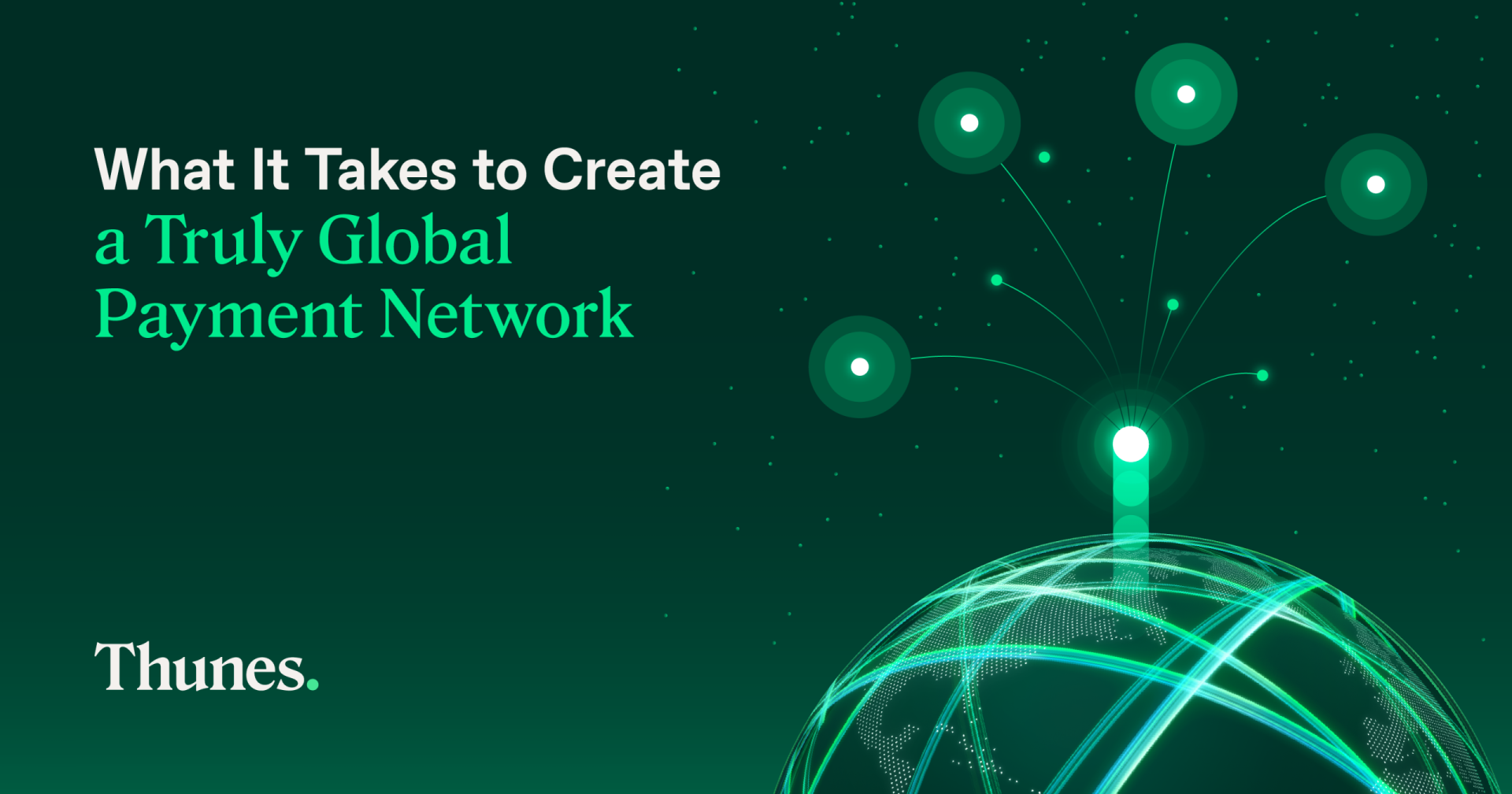
The metrics traditionally used to evaluate international payment networks are fundamentally flawed. For decades, the financial services industry has measured global reach by counting countries, currencies, and corridors. Those numbers fail to answer the critical question for most payment senders or recipients: will this payment complete instantly, and cost-effectively, at the specific endpoint the beneficiary uses?
In this blog, we look at what it takes to make all that happen – combining the essential criteria of reach and scale with local attention to detail, necessary partnerships, robust technology and continuous commitment to interoperability.
- Who needs a cross-border payment network?
- Moving beyond the limits of correspondent banking
- The power of endpoint expertise and rail diversity
- Operational infrastructure and regulatory depth
Who needs a cross-border payment network?
True global scale demands functional operations. For banks unable to reach specific endpoints through their legacy correspondent networks, Payment Service Providers (PSPs) adding new rails, Money Transfer Operators (MTOs) expanding into volatile corridors, or digital wallet brands connecting with customers or partners beyond their domestic markets, a broad headline coverage claim often crumbles during high-volume real-time testing.
The structural gap between what a payment network appears to cover and what it consistently delivers is widest exactly where transaction success matters most.
This friction is particularly visible in high-growth corridors where payment infrastructure is fragmented, traditional banking rails stop short, and the operational cost of a failed transaction is measured in customer churn and eroded margins.
Total cross-border payment values are growing, with FXC Intelligence predicting they will soar to $320 trillion by 2032. But all that money movement will happen over an increasing variety of domestic and international rails with their own capabilities and limitations. As that trend continues, the gap between the capabilities of individual rails and the need of those making the payments becomes untenable, making interoperable payment systems a critical driver of growth and financial inclusion in the world’s fastest developing markets in particular.
The World Bank notes that approximately 1.3 billion adults globally remain unbanked and emerging economies are driving a major share of global transaction volume as they join the global economy on their own terms – across a variety of tools including wallets, and even through stablecoin payments.
The next generation of payment volume belongs to mobile wallets, which are projected to expand to 5.8 billion users globally by 2029. Traditional cross-border payment structures built solely around bank accounts are fundamentally disconnected from the fastest-growing customer bases in the world.
The financial institutions and innovators that capture this momentum require genuine operational depth, encompassing rail diversity, direct local integrations, state-level licensing, underpinned by the interoperability infrastructure required to achieve settlement at the exact endpoint.
Moving beyond the limits of correspondent banking
To understand why networks fail in complex markets, one must look at the mechanics of the traditional correspondent banking system.
When a regional bank or a digital wallet attempts to route a payout from an origin market like Kenya to a destination bank account in China, the transaction rarely travels in a straight line. Instead, it passes through a multi-tiered chain of intermediary correspondent financial institutions.
Each additional intermediary introduces operational latency, strips away vital transaction data, adds unpredictable processing fees and increases the risk of payment failure.
Among end-users like remittance payees or recipients, this adds to a growing sense that cross-border payments are simply not fit for purpose. According to Thunes research, a staggering 94% of expatriates state that their cross-border payment experience falls short due to either hidden costs or long transfer times.
True cross-border innovation requires a structural shift away from this legacy model. While local banking regulations restrict non-bank financial institutions in many international jurisdictions from joining domestic clearing systems directly, no single financial institution would realistically wish to be a direct participant in every single payment scheme across the globe. The fragmented liquidity demands, complex regulatory burdens and massive operational costs far outweigh the financial returns.
The Thunes Direct Global Network achieves global coverage by collaborating with licensed local bank partners around the world, including in some of the world’s hardest-to-access markets, rather than relying on a multi-tiered correspondent bank network.
Through connections to institutions within local clearing systems and payment schemes globally, and integrating directly with local bank partners and major mobile wallet schemes, the Network delivers real-time payouts to billions of bank accounts, mobile and stablecoin wallets and cards across 140 countries and 90 currencies.
The power of endpoint expertise and rail diversity
Building a network capable of processing payments to billions of endpoints requires deep local knowledge, and true endpoint expertise is defined by an ability to navigate the unique technical protocols, liquidity conditions, and messaging standards of individual markets.
A network that relies exclusively on bank account rails contains immediate blind spots in regions dominated by alternative financial interfaces, for instance.
In high-remittance corridors across parts of Africa and Asia, mobile wallets are the primary financial touchpoint. Through a single API (Application Programming Interface) integration, Thunes enables its Network Members to access over 145 distinct digital wallet brands. This rail diversity allows an MTO or embedded finance platform to send funds exactly where the recipient is, rather than forcing them to interact with an inaccessible formal banking setup.
Thunes research indicates that 65% of international remittance senders prioritise transaction speed above all other factors. In a commercial ecosystem where gig economy platforms must pay freelancers instantly, and marketplaces must disburse funds to global sellers on demand, a multi-day settlement window is no longer viable. Direct network integration allows for 85% of transactions to be settled instantly, fulfilling user expectations for instantaneous access to capital.
Simultaneously, direct integrations provide a massive strategic advantage to payment companies through rich data retention.
When a cross-border transaction is routed through an aggregation of third-party networks, valuable remittance data such as complete sender identities, purpose codes and invoice details, is frequently truncated or lost entirely. A direct API connection can allow international operators to retain full visibility of the data payload from origin to final settlement.
What’s more, an unbroken data chain enhances automated transaction reconciliation, drastically reduces compliance review delays, and allows payment providers to glean deep operational insights into corridor performance and cash flow trends.
Operational infrastructure and regulatory depth
The final, irreplaceable pillar of a truly global network is its underlying regulatory framework.
Many technology-driven platforms attempt to build payment orchestration layers on top of aggregated third-party systems without securing their own licensing infrastructure. This approach leaves them highly vulnerable to sudden regulatory shifts, compliance bottlenecks, and unexpected service disruptions.
Genuine scale requires an extensive, owned regulatory footprint. A prime example of this infrastructure in action is Thunes’s real-time payment capabilities into the United States. To provide international Members with native, direct institutional-grade connections to domestic US clearing systems, Thunes holds 50 Money Transmission Licenses across US states and territories.
This extensive regulatory depth allows the Network to support direct payouts via Automated Clearing House (ACH), Same-Day ACH, and real-time payment rails. By holding these licenses directly, the platform can completely eliminate multi-tiered third-party intermediary setups, minimising transaction costs and processing latency, and ensuring absolute compliance with local state frameworks.
It’s a key example of how global payment reach is an operational infrastructure capability that must be built, owned, and continuously maintained. The competitive advantage in global commerce belongs to the businesses that move past superficial regional coverage metrics and integrate with a network built on genuine local depth.
To find out how our infrastructure can streamline your consumer payouts and scale your international corridors, contact our team to explore the capabilities of the Thunes Direct Global Network.