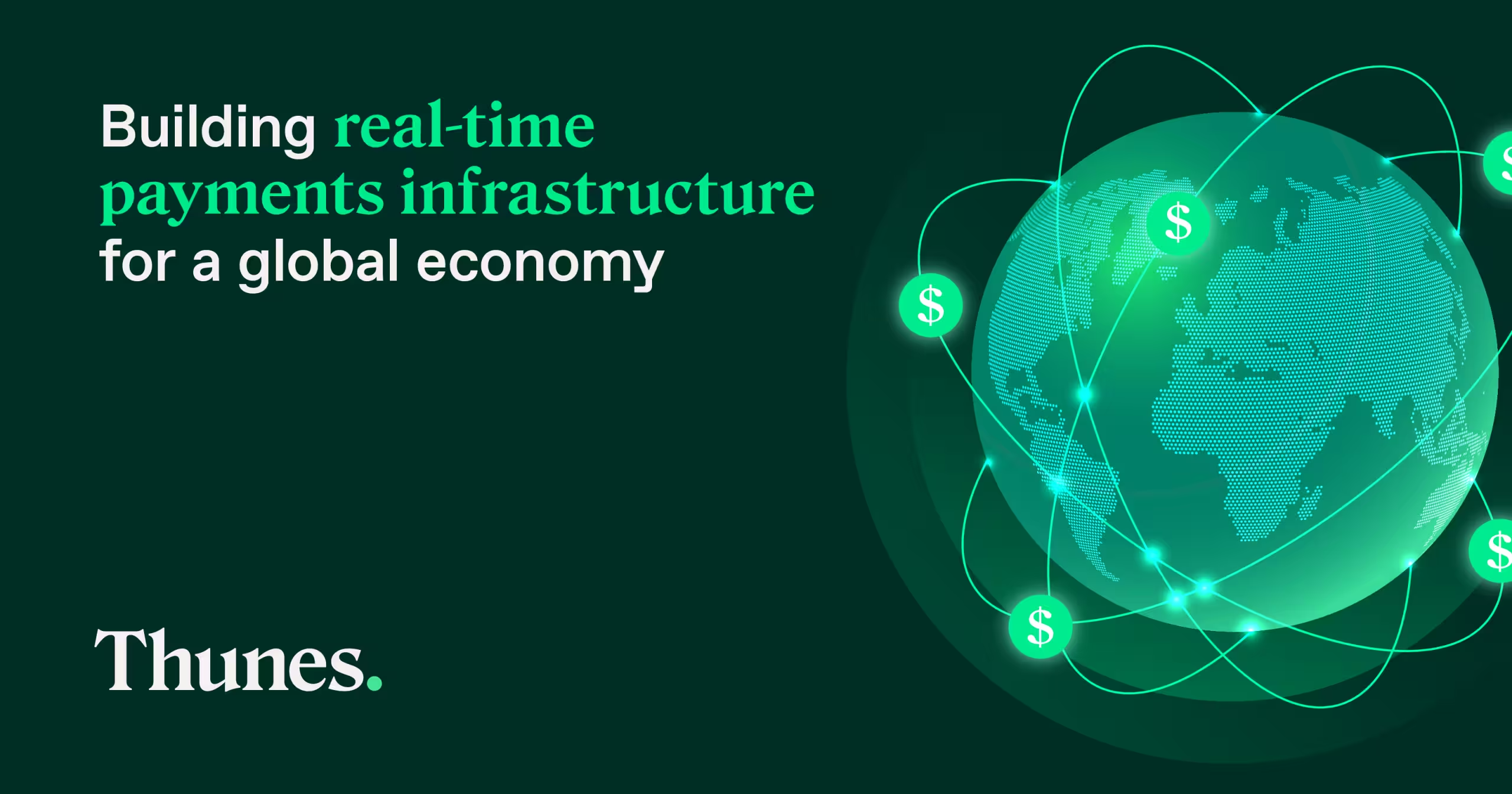
Shaping the Future of Instant Payments: Building Real-Time Infrastructure for a Global Economy
In today’s always-on economy, real-time payments (RTP) have become an expectation. Whether it’s a business settling a cross-border invoice or an individual sending money to family abroad, people want speed, simplicity, and transparency.
This is a shift that involves navigating one of the most complex challenges in financial services today: how to connect fragmented systems into a seamless global experience.
Why the Industry Is Accelerating
The scale of growth in instant payments underscores the urgency of getting this right. Between 2023 and 2028, the market is projected to grow to $112.32 billion, at a compound annual growth rate of over 40%. Even in just one year, from 2023 to 2024, the market saw a 32% increase.
Asia-Pacific is set to drive nearly half of this global growth, which aligns with what we’re seeing on the ground: the combination of smartphone adoption, fast internet, and digital financial literacy is creating a step-change in payment behaviours.
For businesses, the benefits are clear. Instant payments offer improved cash flow, better risk management, and more visibility. And for consumers, the experience is smoother and more immediate than ever before.
The Interoperability Gap
Despite the benefits, RTP remains fragmented by nature. Most real-time payment schemes are domestic and reflect the rules, preferences, and regulatory environments of their own jurisdictions.
From India’s UPI to Singapore’s FAST and Malaysia’s DuitNow, there have been important steps toward linking systems, but these are still limited in scope. Consumer expectations, technical capabilities, and financial infrastructure vary significantly across regions, making interoperability a real challenge, especially on a global scale.
No matter how effective RTP is domestically, sending money across borders often reintroduces delays, costs, and complexity. That’s where much of our current focus lies: trying to bridge these systems so that instant truly means instant, everywhere.
Preparing for a CBDC Future
As Central Bank Digital Currencies (CBDCs) gain traction globally, there are new opportunities, and new challenges, including in the areas of cross-border flows and private payment networks.
At Thunes, we’re actively engaging in pilot programmes and industry forums to help shape how CBDCs interact with global infrastructure. Our aim is to ensure that when these currencies go mainstream, they don’t exist in isolation but rather as part of a broader, interoperable network that includes traditional financial systems, mobile payments and digital assets alike.
The Opportunity in RTP Integration
For any organisation exploring real-time payments, whether you’re a fintech, a bank, an e-commerce platform or a marketplace, the advantages are compelling. Faster transactions, enhanced transparency, real-time confirmation, and enriched data insights can significantly elevate customer experience and operational efficiency.
Integrating with an RTP network does require thoughtful planning. Each market has its own regulatory environment, technical protocols, and localisation needs. Scaling across borders means navigating these differences, but it also opens the door to serving global customers with speed and confidence.
The good news is that this effort doesn’t have to be duplicated from scratch each time. By prioritising high-impact markets, leveraging established platforms, and designing adaptable systems, businesses can unlock the value of RTP without being overwhelmed by complexity. It’s about making smart, scalable decisions that align with long-term growth. Through Thunes’ Direct Global Network, a single API integration provides access to multiple RTP Networks.
Real-Time as Standard
Currently, 98% of mobile transactions processed through Thunes’ Direct Global Network are settled in real time. That level of speed is the result of sustained investment in API-first architecture and deep integration with local payment rails.
Wherever real-time payment (RTP) schemes are available, we connect directly. Where they’re not, we support alternatives like mobile wallets and card payments. Our SmartX Treasury system ensures that liquidity is managed in real time for instant payouts, and enhanced API functionality, including the ability to upload supporting documents, enables real-time compliance screening without creating friction for the end user.
What the Next 18–24 Months Look Like
Looking ahead, pressure for true interoperability across RTP networks is likely to grow. The demand for seamless, cross-border instant payments will only intensify, especially as businesses expand into new markets and users expect a consistent experience no matter where they are.
At Thunes, we’re not trying to reinvent what works locally, we’re connecting it. Real-time payments shouldn’t stop at borders. They should scale with the ambitions of the people and businesses who rely on them.
Contact us to learn how we can support your cross-border real-time payments strategy – with full transparency, and intelligent automation built in.